I'm Anna Nicolaou, a nutrition and blood glucose data nerd.
I help you understand what your continuous glucose monitor (CGM) shows and turn it into food choices that work for your body.
AT A GLANCE
3 things to know about me
-
I've worn a CGM 24/7 since 2018. I live with type 1 diabetes – balancing blood sugar is my other full-time job. My recommendations are shaped by this lived experience.
-
If there's no solid evidence behind it, I won't recommend it. Years as a lawyer trained me to question every claim and check every source.
-
My independence is not for sale. I don't (and never will) sell supplements or take commissions from anyone who does. My only interest is what works for you.
MY STORY
How I came to the world of nutrition
Born in Ukraine and raised in Cyprus, I grew up, like many, eating "dessert" for breakfast. As a law student at the University of Cambridge, I lived on big bowls of pasta and whatever a student budget allowed. My early professional years – hopping between countries, working in big international law firms before I adopted Belgium as home – were not much better: food was whatever was available, whenever I happened to come across it.
Then one day, aged 28, and pregnant with my first child, I was told I had gestational diabetes. This hit hard because it made me realise that I am not invincible after all. That I have to actually do things to help my body work better. The nurse put it in very plain words: "The baby must never see high blood sugar." For the first time in my life, I started paying attention to what I ate, and saw how direct the impact was on my blood glucose.
Two more pregnancies and a diagnosis of "type 2" later, I finally figured out in 2018 (with the help of Dr Google) that I actually had type 1 diabetes. (If you want to know the full diabetes story, it's here.)
From that point on my whole life became a science experiment, and I realised very, very quickly that nutrition was by far my most powerful tool for having a good life with this condition.
If food could make such a difference for me, what else could it do?
I started reading everything I could find, thinking I would get bored after a few months. That is yet to happen. I went on to study for three years at CERDEN to become a certified Nutrition Counsellor, and in 2026 added a diploma in Phytotherapy – the study of how plants can be used to support our wellbeing.
At first, I thought I was just doing it to satisfy my own endless curiosity and search for answers, but that quickly changed.
A REBEL WITH A CAUSE
Why I do what I do
From the start of my health journey, I felt there was a big gap in the care of chronic metabolic conditions like diabetes. I was disappointed after 11 years of the wrong diagnosis and felt that nobody ever took the time to understand and properly explain what was going on.
Other than the finger-wagging gestational diabetes nurses, nobody ever emphasised the importance of disease prevention, nor the importance of diet. I felt that once the baby was out, I was "thrown back into the ocean" and would only be dealt with when I became a candidate for medication.
Then one day it dawned on me: what I was doing was expecting “a fish to climb a tree”.
Doctors do the best they can, with the tools and knowledge they have, within the time they have and the constraints of the system they work in. They are, for the most part, "firefighters" – a noble profession, putting out fires left, right and centre. There are only so many "fires" you can put out in a 20-minute consultation. Modern medicine does amazing things, it saves and prolongs lives every day. But when it comes to prevention of chronic metabolic disease, the leading cause of death today, and addressing its "root cause" – it's not its forte.
Functional medicine and the emerging field of "longevity" medicine make a good attempt, and in my opinion it is a step in the right direction. But we are not quite there yet. The consultations are hard to come by and can feel overwhelming – like a foreign language spoken very fast. They often come with a list of supplements long enough to need an Excel spreadsheet to keep track of.
This is the gap I want to bridge. I am not a doctor, but I can help you understand what is going on and be proactive in your health journey. We will act "upstream" on the everyday food and lifestyle habits that make a big difference, alongside whatever your doctor prescribes.
MY PRINCIPLES
What I believe
-
Food first. You, quite literally, are what you eat. You can't out-run, out-medicate or out-supplement a bad diet.
-
No one-size-fits-all diet. What works for your friend or favourite influencer may not be what works for you. Everyone's metabolism is different. To move the needle you must give your body what it needs and what it is able to handle at this time in your life.
-
Data over guesswork. Good, common sense diet advice can take you a certain way. Watching your glucose in real time with a sensor (CGM) shows how your body responds to your meals, so we can adjust exactly where it matters.
-
Knowledge is power. I will never hand you a diet plan and send you on your way. I always take the time to explain the "how" and the "why". When you understand what is going on in your body, changing habits becomes easier.
-
Forget "going on a diet". Think "becoming a new version of me". Any change you make should be one you enjoy enough to keep for good.
-
Nutrition is powerful, but it's not everything. If we sleep four hours a night, never move and stress is our daily companion, all the broccoli in the world won't work miracles. Movement, sleep, stress, daylight and the people around us all count too.
-
Alongside your doctor, never instead. I don't touch your medication. I help you understand your results and bring better questions to your appointments.
THE BORING STUFF (IN CASE YOU CARE)
Nutrition Qualifications
- Certified Nutrition Counsellor (Conseillère en Nutrition Humaine certifiée), CERDEN, 2019–2023
- Specialised Certificate in Phytotherapy (Certificat d'Études Spécialisées en Phytothérapie), CERDEN, 2025–2026
- Coaching for nutrition professionals (V. Liesse), 2023
- Specialised courses on insulin resistance and on the gut microbiome (V. Liesse), 2024
- Countless seminars on metabolic health and nutrition
THE FUN STUFF
Beyond work
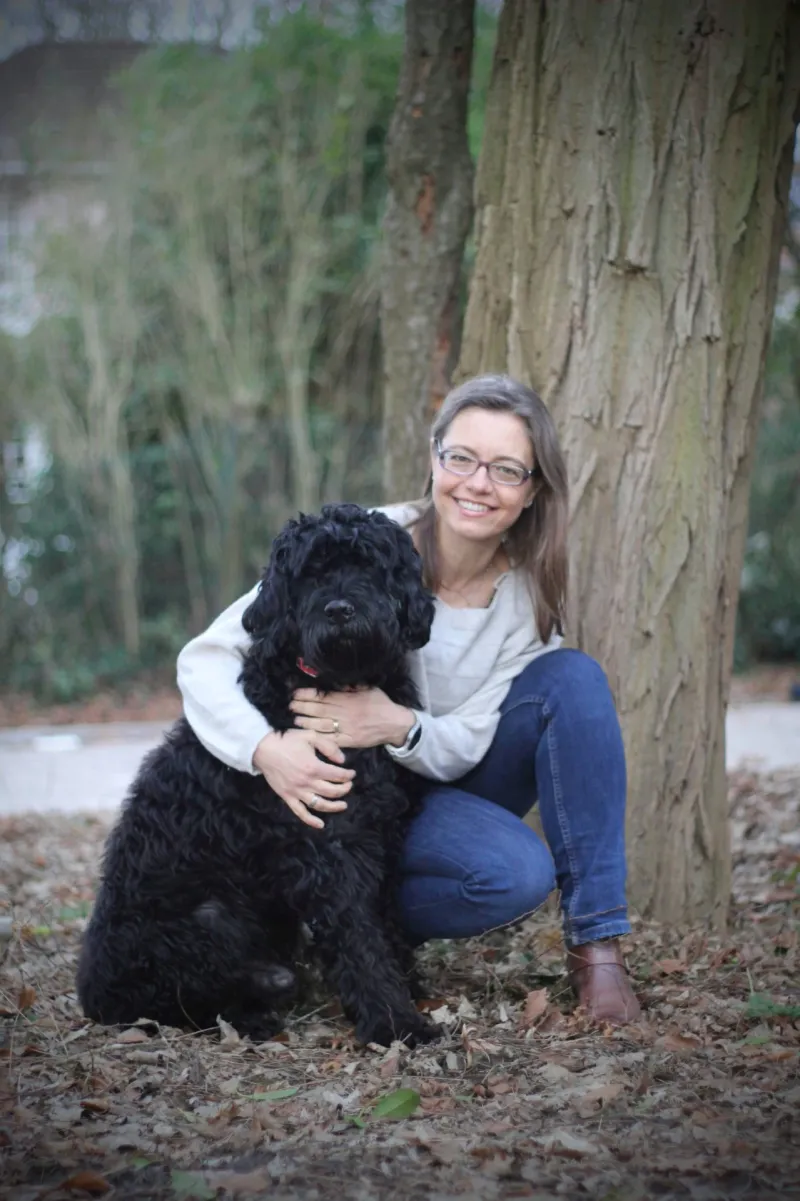
Mum of three boys, wife, dog and cat lover. (You may meet Teddy, my four-legged office assistant: he sleeps through most consultations.). Things I love: swimming in the sea, running, strength training and yoga, My big obsession: Windsurfing on windy summer days!
FAQ
Your questions answered
What can Anna do for you?
I want to lose weight. Can you help?
We'll work together to find a way of eating that steadies your blood sugar and suits your metabolism, and many people find their weight changes as their habits change. I don't promise or recommend rapid weight loss. If you take a GLP-1 medication, see the question below.
I have prediabetes, type 2 diabetes or take a GLP-1 medication. Can you help me?
Yes. Many of my clients already follow a treatment for diabetes or take a weight-loss medication (GLP-1). Good eating habits are particularly important when taking these medications, to maximise your chances of success. I can explain how they work and their pros and cons based on the latest medical literature, so that you can ask your doctor relevant questions and make an informed decision. I will never tell you to take or not take a medication: any decision to start, continue or stop it belongs to you and your doctor.
What if I have other health issues, besides blood sugar?
Any advice you receive from me always takes your wider context into account. This is why I ask you to send me your recent blood tests and a list of all the medications and supplements you take before our first session. I study these carefully and raise anything I believe is relevant on the nutrition side. If you have a particular health concern alongside blood sugar, I help you make sense of the available information, so that you can make informed choices together with your doctor.
Do you work with people with type 1 diabetes?
I live with type 1 diabetes myself, so I understand the daily reality. I'm happy to share nutrition education. I am not a medical professional and cannot advise you on medication, insulin dosage or diabetes technology issues. I can provide suggestions on what you can discuss with your diabetes care team, but any decisions on medication remain with them. Any significant dietary changes should be discussed with them first.
Anna's approach to nutrition
Do I need to count calories or weigh my food?
No maths required. You won't leave with a list of how many grams of chicken and broccoli to eat this week. We work on simple, practical changes to what's on your plate, one step at a time, until they become habits. The only thing you will have to do is log your food or take pictures, so that we have a concrete basis for discussion and, if you wear a CGM, for analysing your data during our follow-up appointments.
Will I have to do keto or remove most carbs?
No. I don't believe in one diet for everyone. Some people feel better with fewer carbs, others don't need to cut them much at all: it all depends on the current state of your metabolism. The type, the amount and the timing of carbohydrates all play a role too. That's why I use CGMs so much in my practice – they allow us to find your carb "sweet spot" (no pun intended!). If you take insulin or certain diabetes medications, you will need to talk to your doctor before making significant dietary changes.
Will I have to give up bread, pasta or chocolate?
I don't ban foods. There's a lot of nuance in nutrition: it's about the type, the amount, the timing and what you eat with them. A CGM shows how your body responds to those foods and when. Often a small tweak, like changing what you eat them with, or taking a walk after the meal, makes a real difference.
Will I have to take a lot of supplements?
No. In my book, food always comes first: there's no point in painting the walls if the foundations of the house are weak. When we start working together, I'll ask what you already take and help you sift through the noise. Just because something is sold without a prescription doesn't mean it's harmless or the right form for you: the dose may be too low to help or too high, some products contain unnecessary additives, and some interact with medication. If I think a supplement could be useful, I'll explain why, what the evidence says and which form suits you. I prefer to support your efforts with plants, usually as simple infusions. I don't sell supplements or take commissions from supplement companies: staying independent is one of my core beliefs.
What is phytotherapy, and how do you use it?
Phytotherapy is the study of plants and how they can support our wellbeing. Where it makes sense, I may suggest plants, mostly as infusions, and explain what they do and what the research says. Plants never replace medical treatment, and some interact with medication, so we have to be careful when using them and check with your doctor or pharmacist if you take medication.
Do I need a glucose sensor to work with you?
No. You are just as welcome without one. But if you're curious about how your body responds to food, a CGM is the clearest way I know to find out, and the vast majority of my clients choose to use them. That said, I do not recommend using a CGM if you have a history of eating disorders or if food is a source of anxiety for you.
About Anna
Are you a dietitian or a nutritionist?
I'm a Certified Nutrition Counsellor (CERDEN), and I have a specialised certificate in phytotherapy. I'm not a registered dietitian. I will not tell you to count calories or give you a fixed diet plan to follow for a set time. My role is to help you understand how food and lifestyle affect your blood glucose and your energy, so you become confident and independent in your food choices and build habits that last.
What makes your approach different?
My approach relies on real-time data from your own body, to find a way of eating based on what your body can handle at this time in your life. There is no generic advice, no cookie-cutter diet plan and no long list of supplements. One of my "superpowers" is making complex science easy to understand and act on: clients often go away with a personalised research recap on a topic that matters to them. And I also speak from experience. Since 2018 I have lived with type 1 diabetes and worn a CGM 24/7, and that level of detail and nuance is simply not available in any textbook.
Why did a lawyer become a nutrition counsellor?
Life gave me "lemons" so I decided to "make lemonade". After 11 years with the wrong diagnosis of type 2 diabetes, I found out in 2018 that I had type 1 diabetes, and food turned out to be my most powerful tool. My curiosity never stopped, and the law books gave way to nutrition books. What my legal career left me with is a habit of questioning every claim and checking the evidence.
Practical
Can I work with you online, or from outside Belgium?
Yes. I see clients online wherever they live, and in person in my office in Rixensart, just south of Brussels (easily accessible on the S8 train). If you do the CGM Coaching programme from abroad, you order the sensor yourself and I'll tell you how. Depending on your country, you may even be able to get your first sensor free.
In which languages do you offer consultations?
I work in English, French, Greek and Russian.
Are consultations reimbursed?
No. Consultations are not reimbursed by Belgian health insurance (mutuelles).
Still have questions?
Book a free callReady to take your next step to better health?
Online, or in person in Rixensart, south of Brussels.
Good to know
I am a certified Nutrition Counsellor (CERDEN). The information and advice presented here and during your consultations are intended solely for wellbeing, functional optimisation and nutrition education. They do not constitute a medical diagnosis, a prescription or the treatment of any disease. They never replace a consultation with your doctor. Never change or stop your medical treatment without first consulting your doctor.
Consultations are not reimbursed by Belgian health insurance (mutuelle).